| All the cells in the body need OXYGEN and FOOD to stay alive and it is the CIRCULATORY SYSTEM which transports them, along with many other things, around the body. |
-
The functions of the Circulatory System:
- To carry OXYGEN to all the cells in the body
- To carry FOOD to all the cells in the body
- To remove WASTE from the cells of the body
- To distribute HEAT around the body
- To form a part of the DEFENCE the body has against microbes
- To REPAIR itself and prevent blood loss by clotting
|
-
The parts of the Circulatory System:
- The HEART
- The ARTERIES
- The VEINS
- The CAPILLARIES
- The RED and WHITE BLOOD CELLS
- The PLATELETS
- The PLASMA
|
 |
The 'DOUBLE' pump of the Human Heart
- Deoxygenated blood FROM THE BODY entering the heart
- The RIGHT ATRIUM
- The VALVES prevent blood flowing the wrong way when the atria and ventricles contract
- The RIGHT VENTRICLE
- The thicker walled LEFT VENTRICLE
- The LEFT ATRIUM
- Oxygenated blood FROM THE LUNGS entering the heart
- Oxygenated blood leaving the heart and flowing TO THE BODY
- Deoxygenated blood leaving the heart and flowing TO THE LUNGS
RETURN
|
The structure of the heart.
- The heart is made of MUSCLE and has FOUR chambers, two on each side. The ATRIA are the two upper chambers and are smaller and less muscular. The lower chambers are the VENTRICLES and these are larger and more muscular. The LEFT VENTRICLE is more muscular than the right since it has to pump oxygenated blood around the whole BODY. The RIGHT VENTRICLE only has to pump deoxygenated blood around the LUNGS.
|
|
How blood moves through the heart.
RETURN
- A Vein takes blood to the heart where it enters an Atrium.
- This contracts and forces the blood into a Ventricle.
- This then contracts and forces the blood out of the heart and into an Artery
Remember: Vein -> Atrium -> Ventricle -> Artery i.e. A V A V
Valves in the heart prevent the blood flowing back the wrong way when the VENTRICLES and ATRIA contract.
How blood moves outside the heart.
The major arteries divide and divide until they become microscopic CAPILLARIES (these are so thin-walled that molecules are easily exchanges between the blood and the surrounding tissues). The capillaries join together to form veins which join other veins to form the major veins which take the blood back to the heart.
(Remember: Blood passes through the heart twice during a complete circulation)
|
The different Blood Vessels

|
|


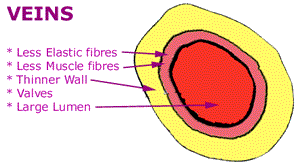
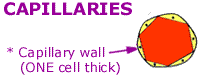 FOOD and OXYGEN pass out through the thin walls into the cells and WASTE and CARBON DIOXIDE enter the blood and are carried away. View a